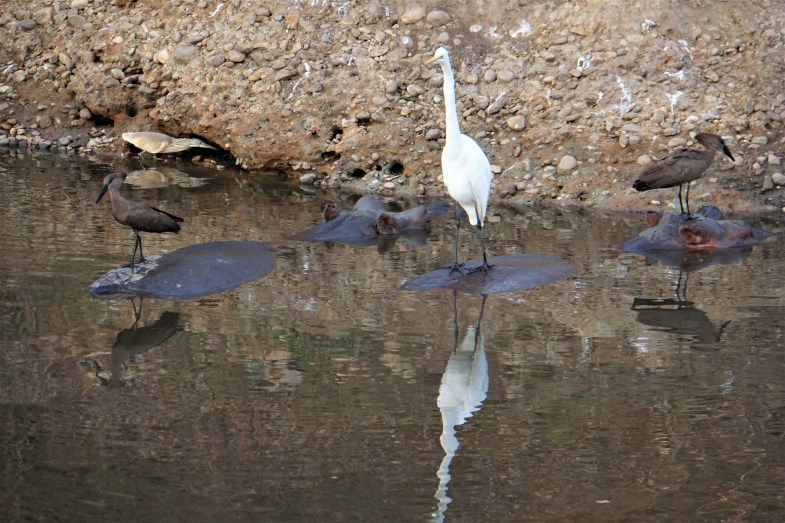
Some final comments on our travels in Northern South Africa, Botswana, Zambia and Zimbabwe.

We had our Toyota Hilux bush camper for 45 days and in that time logged a total of 7,848 kms, burned 853 +/- litres of diesel and camped 29 days.

The roads varied from excellent tar (asphalt) to deep sand to gravel to incredibly pothole-ridden.

Toll roads are common in South Africa and Zambia although it often seemed in Zambia that if a toll was coming up then after the toll the roads would turn to shit. It was quite consistent this way in Zambia and in some towns where the roads all of a sudden became good you had to wonder why.

They would only be good for a short distance before and after the town. We often commented that “this town obviously voted for the government in power” and this could very well be the case.

The worst pothole-ridden roads were in Zambia. They were bad, very bad!

Another irritant was the use of speed bumps combined with the lack of warning signs about the upcoming speed bumps. They came out of nowhere and in many cases there didn’t seem to be a reason for them.

We would be travelling at 100 km/hr and then bam! A speed bump or several rows of bumps. Often they weren’t too big but you just never knew because sometimes they were big enough to rip off the bottom of your car if you didn’t have at least 6 feet of clearance. A slight exaggeration but not by much.

Speed limit signs in Zambia were few and far between so you really didn’t know most of the time what the limit was. And when they were posted it was quite comical because you would hit a speed bump then see a sign to slow to 60 km/hr then proceed over several more bumps then see a sign that would say 100 km/hr and then just as you hit 100 another sign would say 40 and then another speed bump.

They love their speed bumps in Zambia.

They also love their Police road blocks. We encountered countless road blocks. We were never sure what they were looking for and we would generally say hello, how are you, the Police would say hello, where are you going or where did you come from and we would be on our way. Except once.

While driving through a narrow tree lined sand and bush trail in Liuwa Plains National Park, crashing side to side, a tree smashed the driver’s side view mirror of our truck.

So, now we are driving with a damaged vehicle.

We were stopped by the police a couple of times and at one stop we were asked why is the mirror pushed into its closed position? I replied, because it is broken. He paused and then waved us on.

Now, in Zambia if you have any encounter with a tree or whatever and you damage your vehicle you’re supposed to stop at the next Police station and report it. Of course we didn’t know this and the Policeman who asked us about our mirror and let us go in the first place didn’t tell us so how the heck are you supposed to know I wondered other than studying the countries road rules-and-regulations handbook if one actually exists.

When we departed Mana Pools NP in Zimbabwe, where the small sampling of the roads we did indicated to us they were probably on par with Zambian roads, we re-entered Zambia and within kms we hit a road block.

“What’s with the side view mirror” we were asked. It’s broken I replied. Just broke it in Mana Pools. A small white lie. ” No, I didn’t know I had to report this to the Police and besides, we just came out of the wilds and now we’re heading back to Botswana where they probably don’t give a crap.

“Well, there was a Police station in Chirundu where you crossed the border, you should have reported there”. Yes, but I didn’t know I needed to report it. Where I come from you don’t need to report every scratch and dent to the police. It’s none of their god damned business!

“Pull over there please and follow me” so I park the truck, cross the road and am led to a police car. A woman cop is in the passenger side. She looks at her colleague, he says”broken mirror”, she says did you report it to the police blah, blah, blah.

She was the main cop, judge and jury and I was fined 300 Kwacha, the equivalent of about $30 CAD and was told I now have a free pass to use for any further road blocks where they may actually give a damn about our mirror.

We didn’t hit another road block for the rest of our journey through and out of Zambia but I have a great souvenir.

Self-driving, in our opinion is the best way to see the real Africa, or any country for that matter. Tour groups or overlander trucks don’t take the side roads and stick primarily to the more crowded and popular campsites, the ones with a pool and communal cooking and washing facilities.

They do see some great places but they don’t require a 4×4 so they don’t see some of the many little villages scattered along a sand or gravel road. Thatched huts, children and women carrying water or firewood on their heads, goat and cattle herders and the wonderful sight of people getting by in their environment with very little.

Some of these villages have probably been this way forever. Others were more developed and we were happy to see many primary schools dotted throughout. Not many secondary schools though so education for many is probably to a grade 6 level. Education isn’t free so this creates a challenge for many.

We spent most of our time in Zambia so I’ll continue with the narrative as Zambia was the highlight of our trip.

Tomatoes and potatoes seem to be the crop that is sold along the roads in the villages this time of year. Everyone sells tomatoes or potatoes with a sprinkling of onions and corn/maize. Outside of the towns and villages the sides of the roads are dotted with large bundled and wrapped charcoal firewood.

This has been outlawed in Zimbabwe but is still legal in Zambia which unfortunately is adding to the destruction of their forests. This is the primary source of heat and cooking fuel and we honestly don’t know what the people would use otherwise. The country has a long way to go in solving this dilemma.

The cost of living is low in Zambia, expensive in Botswana and quite reasonable in South Africa and the wages reflect this although we found a disconnect in Botswana. The minimum wage in Zambia is 1,500 kwacha/month, about $150 CAD. Food is cheap as is beer and other sinful indulgences which we’re sure someone on minimum wage does not enjoy.

A meal at a restaurant in a small town is about $4 CAD and can easily be shared by two people. 50. The most I paid for a beer was about $3 CAD and this was at the Royal Zambezi Lodge. 40 for a 12 hour shift. He took home after 24 days about $200 CAD!

We met many young people who had dreams of being a doctor or teacher or just wanted the ability to continue their education but the roadblocks (no pun intended) seem insurmountable. The human potential in this small part of a great 55-country-strong continent is incredible but, the government corruption to this day is alive and well and has a stranglehold on the people who want and DESERVE a brighter future.

The land is blessed with fertile soils, minerals and desire. Technology is making its way into the daily lives of the people. Cell phone rates are cheap and there is a whole new cell phone cash transaction industry developing to allow small business and entrepreneurs to sidetrack the bureaucratic red tape that is so embedded into their daily lives. Enough said.

Our truck was fantastic. It handled the deep sand roads/trails beautifully. While in Botswana we met a couple from Britain who lived in Zambia and we told them we were going to Liuwa Plain NP and then on to Kafue NP. First he rightly explained the hassle we would encounter entering Zambia from Botswana via the Kazungula border crossing.

He was 100% correct and he then continued to tell us about the horrors we would encounter in what I thought was Kafue NP. Be prepared for your truck to overheat driving in low gear in the sand. The “deep” sand, Have a contingency plan”.

We actually thought he was talking about Kafue NP because I mentioned the two places in one sentence so we were extremely apprehensive and after leaving the deep sand of Liuwa we arrived in Kafue. It was a walk in the park. I really don’t understand where people get off giving you horror stories about a place.

A simple ” the sand is deep, be prepared” should be all he said. Inside of me I had a deep anxiety about what to expect in Kafue and then it dawned on me he was talking about Liuwa. What a dick!

GPS versus good old maps….

When we last drove through South Africa, Namibia and Botswana we used maps. Actually Google Maps for SA and real live paper maps for Namibia and Botswana. I think we only got lost once in SA. We were told not to rely on GPS as it would probably get you lost and I can attest here and now that “they” were 100% correct.

When you use a map you can see the broader picture, where you are in relation to towns, roads, villages etc. A GPS shows you your spot in time with no relationship to your broader perspective. You trust the GPS and you don’t really know if it is giving you a short-cut, a best road option or what.

It doesn’t know how you want to get to your destination, only what roads it has in its map memory and whether there is a fence or not or whatever. There is a road so therefore it must be traversable.

In cities GPS is generally good but the first day we picked up the truck in Joburg we entered our lodge name and followed the GPS directions. As we neared the general vicinity of our lodge it kept telling us to turn left and we would be at our destination.

It wasn’t our destination so finally we used Google Maps and we found our place immediately. These little instances leave a very huge doubt about their accuracy in the back of your mind. We were never 100% confident in our GPS directions so our advice is to carry maps at all times and be prepared for the inevitable.

Leave plenty of time to reach your next destination because you really don’t want to be driving at night.

Self-driving independently through Africa is a great experience. We promised our granddaughter we would bring her to Africa when she turns 16. That’s 5 years from now but we have a feeling we’ll be back sooner.

← Previous Post   |   Next Post →   |   Back to Country Main Menu

African Roads, Speed Bumps and Traffic Fines

We had our Toyota Hilux bush camper for 45 days and in that time logged a total of 7,848 kms, burned 853 +/- litres of diesel and camped 29 days.

The roads varied from excellent tar (asphalt) to deep sand to gravel to incredibly pothole-ridden.

Toll roads are common in South Africa and Zambia although it often seemed in Zambia that if a toll was coming up then after the toll the roads would turn to shit. It was quite consistent this way in Zambia and in some towns where the roads all of a sudden became good you had to wonder why.

They would only be good for a short distance before and after the town. We often commented that “this town obviously voted for the government in power” and this could very well be the case.

The worst pothole-ridden roads were in Zambia. They were bad, very bad!

Another irritant was the use of speed bumps combined with the lack of warning signs about the upcoming speed bumps. They came out of nowhere and in many cases there didn’t seem to be a reason for them.

We would be travelling at 100 km/hr and then bam! A speed bump or several rows of bumps. Often they weren’t too big but you just never knew because sometimes they were big enough to rip off the bottom of your car if you didn’t have at least 6 feet of clearance. A slight exaggeration but not by much.

Speed limit signs in Zambia were few and far between so you really didn’t know most of the time what the limit was. And when they were posted it was quite comical because you would hit a speed bump then see a sign to slow to 60 km/hr then proceed over several more bumps then see a sign that would say 100 km/hr and then just as you hit 100 another sign would say 40 and then another speed bump.

They love their speed bumps in Zambia.

They also love their Police road blocks. We encountered countless road blocks. We were never sure what they were looking for and we would generally say hello, how are you, the Police would say hello, where are you going or where did you come from and we would be on our way. Except once.

While driving through a narrow tree lined sand and bush trail in Liuwa Plains National Park, crashing side to side, a tree smashed the driver’s side view mirror of our truck.

So, now we are driving with a damaged vehicle.

We were stopped by the police a couple of times and at one stop we were asked why is the mirror pushed into its closed position? I replied, because it is broken. He paused and then waved us on.

Now, in Zambia if you have any encounter with a tree or whatever and you damage your vehicle you’re supposed to stop at the next Police station and report it. Of course we didn’t know this and the Policeman who asked us about our mirror and let us go in the first place didn’t tell us so how the heck are you supposed to know I wondered other than studying the countries road rules-and-regulations handbook if one actually exists.

When we departed Mana Pools NP in Zimbabwe, where the small sampling of the roads we did indicated to us they were probably on par with Zambian roads, we re-entered Zambia and within kms we hit a road block.

“What’s with the side view mirror” we were asked. It’s broken I replied. Just broke it in Mana Pools. A small white lie. ” No, I didn’t know I had to report this to the Police and besides, we just came out of the wilds and now we’re heading back to Botswana where they probably don’t give a crap.

“Well, there was a Police station in Chirundu where you crossed the border, you should have reported there”. Yes, but I didn’t know I needed to report it. Where I come from you don’t need to report every scratch and dent to the police. It’s none of their god damned business!

“Pull over there please and follow me” so I park the truck, cross the road and am led to a police car. A woman cop is in the passenger side. She looks at her colleague, he says”broken mirror”, she says did you report it to the police blah, blah, blah.

She was the main cop, judge and jury and I was fined 300 Kwacha, the equivalent of about $30 CAD and was told I now have a free pass to use for any further road blocks where they may actually give a damn about our mirror.

We didn’t hit another road block for the rest of our journey through and out of Zambia but I have a great souvenir.

← Previous Post   |   Next Post →   |   Back to Country Main Menu

A Few Final Thoughts

Self-driving, in our opinion is the best way to see the real Africa, or any country for that matter. Tour groups or overlander trucks don’t take the side roads and stick primarily to the more crowded and popular campsites, the ones with a pool and communal cooking and washing facilities.

They do see some great places but they don’t require a 4×4 so they don’t see some of the many little villages scattered along a sand or gravel road. Thatched huts, children and women carrying water or firewood on their heads, goat and cattle herders and the wonderful sight of people getting by in their environment with very little.

Some of these villages have probably been this way forever. Others were more developed and we were happy to see many primary schools dotted throughout. Not many secondary schools though so education for many is probably to a grade 6 level. Education isn’t free so this creates a challenge for many.

We spent most of our time in Zambia so I’ll continue with the narrative as Zambia was the highlight of our trip.

Tomatoes and potatoes seem to be the crop that is sold along the roads in the villages this time of year. Everyone sells tomatoes or potatoes with a sprinkling of onions and corn/maize. Outside of the towns and villages the sides of the roads are dotted with large bundled and wrapped charcoal firewood.

This has been outlawed in Zimbabwe but is still legal in Zambia which unfortunately is adding to the destruction of their forests. This is the primary source of heat and cooking fuel and we honestly don’t know what the people would use otherwise. The country has a long way to go in solving this dilemma.

The cost of living is low in Zambia, expensive in Botswana and quite reasonable in South Africa and the wages reflect this although we found a disconnect in Botswana. The minimum wage in Zambia is 1,500 kwacha/month, about $150 CAD. Food is cheap as is beer and other sinful indulgences which we’re sure someone on minimum wage does not enjoy.

A meal at a restaurant in a small town is about $4 CAD and can easily be shared by two people. 50. The most I paid for a beer was about $3 CAD and this was at the Royal Zambezi Lodge. 40 for a 12 hour shift. He took home after 24 days about $200 CAD!

We met many young people who had dreams of being a doctor or teacher or just wanted the ability to continue their education but the roadblocks (no pun intended) seem insurmountable. The human potential in this small part of a great 55-country-strong continent is incredible but, the government corruption to this day is alive and well and has a stranglehold on the people who want and DESERVE a brighter future.

The land is blessed with fertile soils, minerals and desire. Technology is making its way into the daily lives of the people. Cell phone rates are cheap and there is a whole new cell phone cash transaction industry developing to allow small business and entrepreneurs to sidetrack the bureaucratic red tape that is so embedded into their daily lives. Enough said.

Our truck was fantastic. It handled the deep sand roads/trails beautifully. While in Botswana we met a couple from Britain who lived in Zambia and we told them we were going to Liuwa Plain NP and then on to Kafue NP. First he rightly explained the hassle we would encounter entering Zambia from Botswana via the Kazungula border crossing.

He was 100% correct and he then continued to tell us about the horrors we would encounter in what I thought was Kafue NP. Be prepared for your truck to overheat driving in low gear in the sand. The “deep” sand, Have a contingency plan”.

We actually thought he was talking about Kafue NP because I mentioned the two places in one sentence so we were extremely apprehensive and after leaving the deep sand of Liuwa we arrived in Kafue. It was a walk in the park. I really don’t understand where people get off giving you horror stories about a place.

A simple ” the sand is deep, be prepared” should be all he said. Inside of me I had a deep anxiety about what to expect in Kafue and then it dawned on me he was talking about Liuwa. What a dick!

GPS versus good old maps….

When we last drove through South Africa, Namibia and Botswana we used maps. Actually Google Maps for SA and real live paper maps for Namibia and Botswana. I think we only got lost once in SA. We were told not to rely on GPS as it would probably get you lost and I can attest here and now that “they” were 100% correct.

When you use a map you can see the broader picture, where you are in relation to towns, roads, villages etc. A GPS shows you your spot in time with no relationship to your broader perspective. You trust the GPS and you don’t really know if it is giving you a short-cut, a best road option or what.

It doesn’t know how you want to get to your destination, only what roads it has in its map memory and whether there is a fence or not or whatever. There is a road so therefore it must be traversable.

In cities GPS is generally good but the first day we picked up the truck in Joburg we entered our lodge name and followed the GPS directions. As we neared the general vicinity of our lodge it kept telling us to turn left and we would be at our destination.

It wasn’t our destination so finally we used Google Maps and we found our place immediately. These little instances leave a very huge doubt about their accuracy in the back of your mind. We were never 100% confident in our GPS directions so our advice is to carry maps at all times and be prepared for the inevitable.

Leave plenty of time to reach your next destination because you really don’t want to be driving at night.

Self-driving independently through Africa is a great experience. We promised our granddaughter we would bring her to Africa when she turns 16. That’s 5 years from now but we have a feeling we’ll be back sooner.

← Previous Post   |   Next Post →   |   Back to Country Main Menu

A very long back-track drive, another camping pit-stop then on to the Royal Zambezi Lodge

We departed Zikomo Camp on the 18th and had to backtrack more than 600 km to get to just outside Lower Zambezi National Park.

We had originally planned to stop again in Petauke, where we had made a pit stop on the way to South Luangwa National Park. But after leaving fairly early and making very good time, we reached Petauke by 1:00 pm. There wasn’t much to do there, so we decided to keep going and stop at Pioneer Camp outside Lusaka, where we had stayed previously on our way to South Luangwa.

We arrived just at sunset after about a nine-hour drive. It was worth it because, had we stopped in Petauke, we don’t know how long the drive to the Royal Zambezi would have been the next day—probably about 11 hours.

Departing at around 8:30 am on the 19th, we arrived at the Royal Zambezi Lodge at around 2:00 pm. Finally, a little pampering for three days!

We were treated royally at the Royal Zambezi Lodge, and we had an excellent view from our deck!

Below are some pics of the Royal Zambezi Lodge. Almost two years to the day earlier, we had canoed past the lodge on our four-day, 72 km paddling journey. We thought it would be nice to return someday and try out the lodge. We’re glad we did.

On the second day of our stay, we did an afternoon drive through the protected reserve area surrounding the lodge. The area is administered by local communities and supported by RZL (Royal Zambezi Lodge) and local NGOs. There has been a fairly severe drought in the area, and the animals are having a difficult time foraging for food. Unfortunately, some human intervention has been required, including the scattering of large hay bales, salt licks and watering holes maintained by borehole pumps. It seems to be helping, as the elephants didn’t display the same level of hunger—no protruding ribs and thigh bones—as was evident in the national park. Hopefully, normal rains will return in October.

DSC08327
A hippo safe place away from the crocs

On our third day, we did an early morning drive into Lower Zambezi National Park. We didn’t have any luck spotting lions or leopards during our stay at the Royal, but the drives, scenery and wildlife were spectacular nonetheless.

The lodge was everything we hoped it would be: comfortable accommodation, excellent meals with plenty of choice, and superb staff who went out of their way to ensure we had an enjoyable and memorable stay. We had two very nice surprises on our second and third nights.

On the second evening, Joyce and I were enjoying sundowners at the bar, talking with Prosper, the bartender, and a couple of American visitors. We had made our dinner choices—we both went for the chicken cordon bleu—and were getting ready to move over to our “table for two” when we were told not to go there because they had a surprise for us. Looking at each other, we wondered what was in store.

They led us to the dining area and then pointed toward the wooden walkway leading to the boat docks on the river. Out in the middle of the walkway, on an expanded platform, was a candlelit table for two, far removed from a large American contingent sitting down to eat. Exquisite privacy, in a spot where only hours earlier an elephant had spent some time munching on the floodplain grasses. The stars were in full bloom, and the evening was perfect.

Our second surprise came the next evening. Again, we were having our sundowners at the bar when we realized we hadn’t put in our dinner request. Hoping we weren’t too late, we asked if we could see the menu. “No,” we were told. “Grab your drinks and follow us to the safari truck.”

A little late for a safari, but we followed and were met by Vincent, who had been our exclusive safari driver for the two drives we had done. We hopped into the truck and off we went for what turned out to be a five-minute drive. We assumed we must be going to the Royal airstrip, where perhaps tables had been set up, as we didn’t think there was much else around. But after a short drive, we could see a very large bonfire in the distance and a crowd of people milling about.

There were lanterns and torches surrounding the area, and we were on the banks of the Zambezi River. Tables were set, the bar was fully stocked, and we walked into a beautiful scene straight out of an old African movie. There was one other British couple staying at the lodge, along with us, the lodge managers, Vincent, an NGO representative and several others associated with the lodge and the protected area.

There was impala stew, chicken curry, nshima, rice, vegetables, etc., all described to us by the lodge’s head chef. Wow! We were made to feel at home and very welcome. We’re not sure if this is a standard routine, but we had great conversations throughout our stay with the staff and management and were, as always, friendly and polite (Canadian, eh?), so maybe this helped us snag what we thought was a very nice gesture—and something we will not forget.

Our hats are off to everyone at the lodge for giving us such a memorable experience. A big thank you to everyone at the Royal Zambezi Lodge!

We hit the sheets late—about 10:30, which is late for us on this journey—awoke later than planned and a little fogged by the wine, then departed for the long journey back toward Lusaka and onward to Zimbabwe to experience the World Heritage Site of Mana Pools National Park. We knew we would miss the comfy bed, but we were looking forward to camping again in the African wilds.

← Previous Post   |   Next Post →   |   Back to Country Main Menu

On to the Nsefu Sector of South Luangwa NP, Zikomo Camp

We departed Croc Valley on the 16th and left the crowds and rowdy monkeys behind for the peace and tranquility of Zikomo Camp located on the bank of the Luangwa River opposite of South Luangwa NP.

As has happened a few times so far, when we arrived in the early afternoon we found we had the whole camp to ourselves, at least for the first night anyway, so we had the choice of about 8 sites.

The camp was situated a little distance from the Luangwa River but the Puku, Baboons, Elephants and Hippos were plentiful and we had an almost panoramic view of the flatlands and dried ravines that made up the flood plain landscape.

We settled in, set up our site and relaxed and a few hours later I lit a fire to prepare the brai to cook another gastronomical gourmet delight of bbq sausage with foil wrapped snap peas, green beans and squash with butter.

It was dark when we finished eating and as we relaxed beside our fire the Lodge safari truck drove by on the flats with their spotlight arcing left and right over the dry terrain when suddenly they came to a stop not far from our site. They paused for a few minutes and then continued on back to the lodge.

Joyce and I commented that if it was a lion or lions that they spotted then they probably would have stayed at that spot longer and thought it would be great if they came over to our site to let us know lions were in the area.

Well probably 10 minutes later truck lights approach our camp along the campsite access road. A Safari truck pulls up and four men get out. Two are wearing their guide outfits and the other are lodge employees.

We were sitting beside the fire and when they pulled up we told them they were too late for dinner.

They proceeded to tell us there was a male and two female lions right in our vicinity so we grabbed our light and walked about 15 metres to the banks of our site, shone our light and there sat a beautiful large male lion about 25 metres away.

They then told us the females were probably right behind or near us in the bush so best to keep our eyes open. They then proceeded to their truck and off they went, the truck lights fading into the distance allowing the dark to envelope us once again save for our camp fire.

It was very dark outside and the area was littered with dry leaves from the enormous shade trees dotted throughout the camp site. Any whiff of wind would move the leaves and make it impossible to know if it was the wind or lion disturbing the leaves.

We sat near the fire and listened. We were a bit apprehensive. Then……a loud roar followed by guttural grunting. And very close by.

This lion is really close and there are apparently two more near by as well.

Our site was such that you either face towards an area where the banks extend to the flat lands or, you face looking towards bush to the front and left and right of us. We faced the the larger area of view but behind us was the blind spot.

We sat scanning the area with our high-powered flashlight, hair on the backs of our necks bristling, feeling something must be sneaking up behind us. Sitting back-to-back would be the best way to look out for attacks!

It was getting late, around 8:00 pm (ha ha) so we figured it was probably time to go to bed. As we drew our sleeping bags over us another guttural roar but this time further away. They had moved on. That was an exciting evening!

The next day and evening were uneventful but we did have hippos in the evening feeding very close to our site and on the morning of our departure on the 18th had a great close encounter from a visiting elephant.

← Previous Post   |   Next Post →   |   Back to Country Main Menu

Kafue to Lusaka for a camp pit stop. Lusaka to Petauke for another camp stop then on to South Luangwa National park for 4 nights of more un-fenced camping.

We departed Kafue NP on August 12th and camped overnight at Pioneer Lodge, just outside of Lusaka, about a 6 hour drive.

The next morning we loaded up on groceries and headed out along the Great Eastern Road to Peatuke, a small town about 4 hours drive from South Luangwa National Park. As we checked in to get our campsite another couple from Germany arrived. They had pulled up in a fully decked Land Rover and were dressed the part. Safari pants and shirts, Crocodile Dundee hats and…they both wore a knife sheath and knife on their left waist. Very cool. Well not really.

Now, no offence to the German population but cultural appropriation which they absolutely love didn’t even fit here. Joyce and I spent the rest of the evening wondering what the hell the knives were for. They did mention to us that they were going to take the off -road route to South Luangwa so maybe they were going to skin a few Impala on the way to add to their fridge and maybe make some Impala schnitzel to roast over their open fire.

Who knows. It was strange.

We opted to have dinner in the lodge restaurant. The menu was varied and exciting (again not) with ultimately only three choices. We wanted a burger, they only had curried chicken, 1/4 roasted chicken or stir fried chicken or something. We split a very salted stir fry.

We departed early the next morning for a 4 1/2 hour drive to Croc Valley Camp, located on the Luangwa River on the opposite side of South Luangwa NP.

We’ve become used to camping in very private surroundings. Croc Valley wasn’t what we were used to. Our site was nice in that it was on the banks of the river but there was no privacy. There were two large groups within spitting distance on either side of us.

South Luangwa NP is a popular place so we really can’t complain about the crowds. We are a little spoiled considering where we have camped so far however the view from our site was excellent save for the effing monkeys who will steal the shirt off of your back if you’re not paying attention.

We arrived early afternoon, set up camp and relaxed for the remainder of the day.

I lit the fire and cooked chicken paprika over the flames with a nice side of scalloped potatoes and carrots with butter.

We decided to pay for a morning safari drive so we hit the sack early and arose at 4:45 am the next morning so we would have time for two cups of coffee, instant oatmeal with banana and a small yogurt before our 6:30 am departure. There were only four of us in the truck, perfect for a 4 hour drive.

Zambia has been suffering through drought so the area seemed to be particularly drier than our last visit in 2017. There was less game and after a couple of hours we began to think this drive was not going to live up to our expectations but there were still good photo ops for the scenery and animals.

Here’s the thing.

We all have these great expectations but we have to understand that in life there are no guarantees so you have to just breathe in and appreciate the incredible experiences that are in front of you and the anticipation of excitement that may be just around the next corner.

DSC08149

Lilac Breasted Roller

Before we could be a little bummed another safari vehicle pulled up beside us and told us a pride of lions had been spotted about a km away so we proceeded to race to the scene where we were greeted by a beautiful male lion, three females and four cubs. They had just settled down for a nap so we were able to get up close for some good photos. They obviously had a recent kill as their stomachs were bloated, especially one of the cubs who laid on his side panting heavily as he snoozed and digested his recent gorging.

DSC08173

On the 16th we departed an overcrowded and no-privacy Coc Valley Camp and proceeded to the northern sector of South Luangwa to Zikomo Camp.

← Previous Post   |   Next Post →   |   Back to Country Main Menu

More pot-holed-pot-holed roads on the way to Kafue National Park. But very much worth it!

It’s hard to describe the potholes on the many roads we’ve encountered so far. It’s not one or two, here and there. It is giant craters scattered across all lanes and shoulders so it is impossible to weave your way around them. You drive one side on the road, the other on the gravel shoulder. You drive a whole new path along the shoulder, sometimes a new makeshift road. You drive no faster than 10 km/h. IT DRIVES YOU NUTS!

We arrived in Kafue on August 8th to an amazing campsite in a magical location. Mayukuyuku Bush Camp.

Our campsite was located on the banks of the Kafue River with a panoramic view across and around the winding river.

We spent most of our days sitting and watching. Hippos would congregate on the opposite shore to bathe in the warm sun. Crocodiles would be nearby doing the same and the occasional single or group of elephants would wander down to the riverbank for a drink or a snack.

Large and small crocs would drift by in the current and the occasional bushbuck and of course pesky monkeys would wander by within feet of our location.

We had originally planned on spending two days at our first stop, Mayukuyuku Bush Camp, and then move on to another camp, McBrides, but when we found out how far and long the drive would be to McBrides and even more so how much we loved where we were, we decided to stay four days and stay put. Fortunately our site was available for the extra two days. We were very happy campers.

The camp attendant, Pizon, was amazing.  He would come by every morning and wash our dishes. Yes, do our dishes, and in the late afternoon would show up with a wheelbarrow full of wood and start our fire. Every day he offered to do our laundry and on the third day we acquiesced and he returned a few hours later with fresh, clean laundry.

This was certainly something we really haven’t experienced before and probably never will again. He was always happy and if we said ” thank you”, he said thank you in return. What a guy!

On our arrival we were told of a dead hippo that was stuck in some rocks and rapids upstream from the camp. The next day we did a short hike and in the distance we could see, and smell the bloated body of this deceased hippo.

The next day it broke loose from the rocks and drifted down towards our site and presented us with the most amazing crocodile feeding frenzy you could ever expect to see. True National Geographic stuff.

I’m the Chief Cook and Bottle Washer and loved every minute of burning my fingers and daintily slicing veggies etc. with our serrated knife.

We were told by a couple of South African campers that an elephant had swum across the river and walked straight into their campsite. We were hoping this would happen when we were there and on the third morning at about 5:45 a.m. I heard a loud crunch in the bushes beside our truck. I looked out through the screen and saw two large tusks and then a beautiful large elephant pass right beside us. Joyce pulled out her iPhone and caught these two pictures before it ambled off into the next campsite and into the bushes. This is what makes memories in Africa!

The hippos in the area were abundant and we happened to look over a grassy area on the banks of the river. Every evening just after dusk the hippos would become very vocal and slowly make their way to land to feed.

We just happened to be overlooking one of the areas where they would pop in for a bite and on our second evening we were treated to several that came ashore and grazed within 20 metres of where we sat watching.

On our third night we watched under the almost full moon close to a dozen wander up onto the land but they were just a bit to the side of our viewpoint but watching the dark figures snort and splash as they made landfall under the moonlight was spectacular.

We reluctantly departed Kafue on August 12th and made our way to a small lodge/campsite just outside Lusaka. Below is a typical bathroom break scene.

IMG_0931


← Previous Post   |   Next Post →   |   Back to Country Main Menu

A “Pit Stop” in Mongu then on to Kafue National Park

The drive from Kalabo to Mongu is about 52 km, if we don’t follow Garmin GPS and Google Maps!

After our ferry crossing from Liuwa Plains NP to Kalabo it was around 12:30 and we expected to arrive in Mongu about one hour later. When we arrived in town we checked our itinerary information and confirmed the name of the lodge we were staying at and then proceeded to try to find directions using all three of our map apps.

We could not find the name of the lodge on any of our electronic guidance systems!

We pulled the truck over and checked and re-checked our GPS, Google Maps and Maps.me.

The name of our place that was supposedly in Mongu was the Makapayela Lodge. Written beside the name on our itinerary (my handwriting) was Ithteke Lodge.

I recalled when we picked up our truck we were told the lodge had recently changed their name so we searched for Ithteke. Still nothing. We had a phone number on the bottom of our hotel voucher so we called it and spoke with “Max”.

Max was a guy with an intermediary travel company used by Bushlore, the company we rented our truck from. We didn’t know this and it was Max’s company that made the Mongu accommodation arrangements for us.

Max said he would email us directions. We waited and waited so in the meantime we started asking people around us if they knew of the hotel. They all knew the old name, Makapayela, and gave us many different directions but all of the directions were not in the town of Mongu where we expected the lodge to be. It seemed it would be much further away.

The lodge was 27 km out of town on terrible sand and gravel roads and would require a 180-degree turnaround drive back to Mongu the next day. The road was potholed hell and seemed to be taking us into the absolute middle of nowhere.

When we finally arrived, two hours after arriving in Mongu, we were greeted with a sign on the entrance that said “Ithteke Lodge”. The sign looked like it was a hundred years old. We’re not sure how “recently” they changed their name but certainly not in the last decade!

The lodge had a nice layout but was looking run-down. It was located on a lake with a small beach in front and was apparently a weekend party place. The rooms seemed nice.

We were the only guests. There was no hot water, they couldn’t fulfill our dinner order and they shut all the power off at 8:00 p.m. sharp.

What a disaster considering we thought we were staying in Mongu and our plan was to fuel up and get groceries in the afternoon so we could have an early departure to Kafue the next morning.

It was not going to happen.

DSC08013
School girls dancing at a village on the way

← Previous Post   |   Next Post →   |   Back to Country Main Menu

Liuwa Plain National Park

“Because Liuwa Plain National Park is so isolated, it remains one of the most pristine safari experiences available in Zambia. It mainly attracts the 4×4 community who come to explore this unspoiled territory and stay at one of the community campsites within the park. Although African Parks assists with bookings and management, the campgrounds are owned and run by the community”. Zambia Tourism.

We spent 3 nights in the middle of nowhere in a pristine and way off the beaten track 3,600 sq.km park.

There are four community campsites in the park.

Our camp, Kotayana Camp, had five camping spots with a clean ablution block with hot and cold running water and rustic but clean showers.

By the time we arrived at the park any other tourists who had been in the park had departed. We were the only people in the whole park save for a few small villages scattered around the periphery of the park boundary. It was surreal.

The very best time to visit the park is in November after the rainy season when the whole area explodes into flowers and green pastures which supports the second largest Wildebeest migration in the world along with a massive array of bird life.

We came to Africa of course to see the wildlife but more importantly this time to experience all of the many other wonders on offer and at Liuwa Plain it was the silence and vast open spaces dotted with Zebra and Wildebeest, with Fish Eagles and Crowned Cranes hanging around watery areas and the occasional Secretary Bird bobbing along through the tall plain grasses.

In the evenings as the sunset large flocks of Crowned Cranes flew over our campsite flying back to to their resting places. As they approached you could hear the whoosh of their wings and if there wasn’t a breeze it seemed you could feel the wind from their wings.

It was very hot during the day, at one point registering +40 C and the warm wind barely turned to cool in the evening.

At sunrise the same happened except this time they were flying to their feeding areas and they were noisier, squawking to each other as if to say turn this way, or that way.

There are many Cheetah in the area but unfortunately we didn’t see any however there are also Brown and Spotted Hyena which paid us a visit each evening after we went to bed except for our second night when we had a pleasant encounter at around 6:00 pm, just near sunset.

For dinner the night before our 6:00 pm encounter we had pork chops cooked on the brai over our open fire. Having a couple of bones left we thought about throwing them into the bush near our site.

Now to be honest you really aren’t supposed to do this. Regardless of whether the park is empty of tourists it is a no-no to feed the wildlife, in this is case and anywhere else in the world.

We threw the bones into bush near our campsite. Our bad.

That night/early morning we heard a visitor and could hear it crunch the bones and rustle around looking for more scraps so when it came back earlier the next evening we figured it was intent not to miss out on more goodies.

We were sitting near our fire, I was prepping the foil wrapped squash and carrots and beef sausages and out of the tee lined periphery of our site a very large Spotted Hyena appeared.

He looked us, we at him, Joyce ran to the truck for her camera and my video camera and we proceeded to watch it circle near by with a look of further food scrap anticipation. It eventually wandered into the tall grass near by and waited patiently for us to go to bed.

Before going to bed we again did what you really shouldn’t do. We had some raw chicken drumsticks that we weren’t confident in eating so we threw them into the bush near by. Sure enough, late in the evening we heard Scotty the Spotty came over and probably have his/her first feast in quite a while considering there isn’t whole lot of food around in the park at this time in the season.

We were happy to hear satisfaction squeals after it finished but then I heard beer bottles clanking. I had squashed some beer cans and put them in a bag with a couple of beer bottles and tied up the bag. Never has this been a problem in the past but Scotty must have liked the barley smell so he/she carted it off to the bushes.

We heard a little clinking and clanking and had visions of having to pick up the mess scattered throughout the bush but fortunately when we got up at sunrise the bag was intact and just nearby.

When we initially arrived at our camp we met the Camp Attendant, Agray. He and his family and his families before him grew up in the area and he has been working for Zambia Parks at Katoyana Camp for the last 14 years.

He is a wonderful intelligent man and must have a certain inner strength and peace as he is stationed at the camp for weeks on end and for many weeks may not have any human contact. The park is very busy in late October and November but otherwise relatively empty so he spends his time in solitude with only a two way radio for communication and a small radio to listen to news and what-have-you.

He has no refrigerator and his exercise consists of walking around and maintaining the camp site and using a “stair-climber” type of water pump to maintain the water levels in the solar heated water tanks and water supply for the toilet and shower. We had great conversations and we exchanged contact info. We will definitely keep in touch with Agray.

Our departure back to the pontoon ferry to Kalabo was similar to our departure from Kalabo to our campsite. We sort of got lost but this time after only 2 1/2 hours and a bit of backtracking we made it back to the ferry crossing and the best (or worst) was yet to come.


← Previous Post   |   Next Post →   |   Back to Country Main Menu

Next stop, Liuwa Plains National Park

← Previous Post   |   Next Post →   |   Back to Country Main Menu

A pot-holed journey to Sioma Ngwezi National Park

We arrived at Sioma Campsite on August 2nd after about 420 km of travel of which 100+ km was described as a “not a very good road” in our research. It was not a “not very good road” but a “very not very good road”! It was a bit of an adventure and the video clip below gives a good example of what we endured for probably close to two hours of driving.

We passed through many rural villages and all had Ministry of Education schools and health clinics so positive development is obviously happening in Zambia.

The road eventually became a nice paved surface and the remainder of our drive was pleasant but surreal as the road was newly paved with bright centre and shoulder lines freshly painted and yet the villages we passed were still traditional grass-thatched huts with reed bunch windbreakers and cattle corrals.

We stopped into the town of Sesheke en route and picked up some ice for our cooler and noticed several Halal meat signs on the meat shops. There were also some shop names with the word “Israel” so we assume this village may have a Jewish and Muslim influence. More research needs to be done to confirm this.

Once we picked up our ice we proceeded a little further down the road and I thought one of my tires might be a little low on pressure so we stopped into “Busy Auto Repair” to check it out. I got out of the truck and met a nice young man and I asked if he could check my tire pressure. He pointed to his sign and said “can’t you read, I’m busy”! Ha ha, I had to throw that in there. Our tires were fine. Bad joke.

Our campsite at Sioma was actually quite beautiful. We overlooked the Zambezi River and would occasionally see fishermen paddling out into the lazy current.

Although the road signs on the highway near us warned of elephant crossings unfortunately there were no elephants and worse, no hippos in the waters we overlooked.

The actual park was several kilometres away from our site and the main attraction in the park is waterfalls that were supposed to be second in size to Victoria Falls. We knew from previous experience the low water levels this time of year are very low so we decided to skip the park.

Sioma camp has a great website but I think it might be several years old. They advertised first and foremost “cold beer”. The sign on the entrance from the highway even advertised this. It made you thirsty and looking forward to a cold one once you set up camp.

They had six beers in a freezer and the bar area was decrepit.

They advertised fishing expeditions.

When I asked the Manager, or whoever he was about fishing, he said his hooks were all ruined. What about the boat I asked? No boat he replied.

Maybe this place was happening years ago. It looked like it could have been a cool place, but as I write this we are the only people staying here and I couldn’t even find anyone around to pay for our firewood.

There is a communal bathroom and showers and they are nice. There is also a small kitchen spot on the grounds with gas to do some cooking but overall, still kind of sad.

We think this is a place to avoid or at best use for a one-night pit stop on the way to Liuwa Plains NP or Mongu en route to Kafue National Park.

It is 10:00 p.m. as I write this and rather than listening to the sounds of nature we are surrounded by barking dogs in the distance and far off highway noise. Our next destination, Liuwa Plains is pristine so we are really looking forward to three nights of a true untouched non-commercialized bush camping experience.

← Previous Post   |   Next Post →   |   Back to Country Main Menu