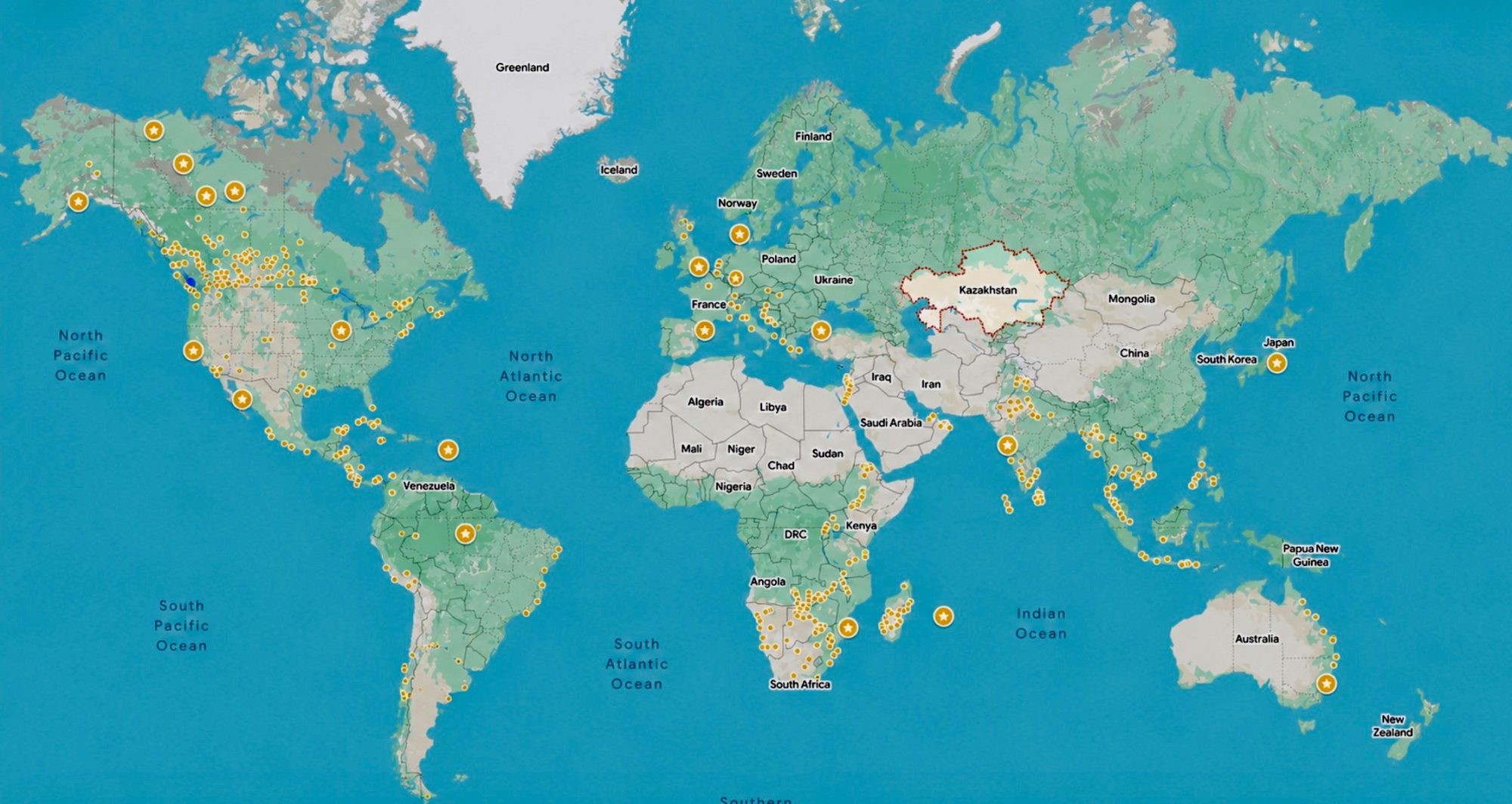
Our next adventure: Columbia and Central America

First stop, Medellin, Columbia via Toronto and Bogota. We departed January 5th and arrived at out hotel 23 hours later January 6, 2023, had a taxi waiting for us at the airport and headed to our hotel quite tired from the long journey.

← Previous Post   |   Next Post →   |   Back to Main Menu

Melaque, Mexico.

Mexico

Flag of Mexico

Melaque, Mexico.

Melaque, San Patricio and Villa Obregón are the neighbourhoods that make up what people call Melaque.

Melaque is about 200 km south of Puerto Vallarta, and it still maintains a very quaint and not-too-touristy quality. There are no name-brand restaurants, and ATVs, golf carts, horses, motorcycles, bicycles and, of course, some cars are the main modes of transportation.

The beach is long and wide, with beautiful white sand, but the shore is mostly steep and unfortunately not very swimmer-friendly. You can swim, but wave timing is of the essence when entering the water. The western end of the beach is much calmer, but the sand isn’t quite as nice due to the proximity of the El Pedregal River, which flows into the bay.

Where we were staying, the crashing waves created by the steep shoreline literally sounded like bombs going off—to the point that our windows occasionally rattled—and it went on 24 hours a day. However, we did get used to it. What was hard to get used to was the dogs barking all night long.

Packs of stray dogs would bark and bark and bark in some sort of competition to see who could bark the most and the loudest. It was incessant, and then, just as they had barked themselves to death or sleep, the fucking roosters would start. I guess they were waiting for their turn. And it wasn’t at sunrise. No. It would be 3:00 or 4:00 am! I don’t know, but maybe roosters can’t tell the difference between the moon and the sun. I thought they only did their cock-a-doodle-dooing when the sun came up. So much for what we learned in school.

There is a small expat community and a lot of older and greying snowbirds who call this place home for 4–6 months a year. The music scene reflects this to an almost comical level, but I sincerely mean this in a good way.

I don’t know how many times we heard the song “Tennessee Whiskey” and so many other oldies but goodies, played by old hippies with their guitars and others with their karaoke boxes singing the latest tunes—from 1968. They played at local venues, tip can front and centre, and were usually the warm-up acts for the more established local and area bands that would start early in the evening.

We spent a total of about 9 weeks in Melaque, with a short 10-day jaunt to Puerto Vallarta in between.

Our first destination was La Paloma Oceanfront Retreat, located in San Patricio. We spent our first four weeks and our last week there after returning from PV. It has 14 very nice units of varying sizes, a great pool and an excellent continental breakfast included—all located right on the beach. A great place, and we will definitely stay there again.

La Paloma was right beside a very popular bar for the 65-plus crowd, and this is where we had no choice but to listen, over and over again, to the greatest hits from the sixties, with a little seventies thrown in. It is named “The Albatross,” and it served good food, cold beer and reasonably priced tequila. The place would be packed by 4:30 with a sea of grey-haired retirees dancing and having the time of their lives. It was funny but great at the same time, and we hope we will have the same zest for life when we hit the golden 70s, which unfortunately isn’t too far away!

Our second stop, for three weeks, was Sueño del Sol in Villa Obregón—a beautiful, newly renovated/built hotel.

This place was a little more expensive, but the rooms on offer were very nice, and we were able to snag a large one-bedroom unit with a fully equipped kitchen on the ground floor. We could walk out of our unit right beside the pool, steps from the outdoor mini-kitchenette and barbecue. The pool was fantastic and, again, we were right on the beach. The owner, Gord Erickson, is a Canadian from British Columbia, and he turned an old, rundown, abandoned hotel into a really beautiful place.

Both locations were excellent. However, La Paloma was a shorter walk to the main townsite—but only by about 10 minutes.

The food everywhere was very good and affordable, and it was served by locally owned small restaurants.

Melaque is a great place—semi-undeveloped and a great original town in Mexico.

A road trip through Western Canada with seven days of relaxation and fishing from a secluded lake cabin in the Minaki wilderness of North Western Ontario.

Cabin fever has set in, our waist lines are continuing to get larger and the itch to travel is getting severely itchy! Fortunately we can finally get in a little scratch.

After about four months of successfully flattening the Covid curve we can finally travel through the western Canadian provinces of British Columbia, Alberta, Saskatchewan and Manitoba as well as north western Ontario without the need to self quarantine for 14 days when we reach our final destinations so tomorrow we will head off and take three nights and four days to drive about 2,300 kms to Winnipeg, Manitoba. It’s a long drive so the days will primarily be sightseeing through our car windows but we know the scenery will be spectacular.

We’ll depart Vancouver and travel through the Coastal Mountain range and then through the Monashee Mountains, the Selkirks and then the Rockies, descending the foothills through Calgary, Alberta and into the plains of Alberta, Saskatchewan and Manitoba.

It’s the middle of summer in Canada so we expect temperatures in the mid to high 20’s C with some 30+ days and probably some really good late afternoon thunder and lightning storms. There is nothing better than a good storm on hot summer afternoon on the prairies or lake regions.

We’ll visit family in Winnipeg for three days and then continue east and north for about 250 kms to Minaki, Ontario where we’ll park our vehicle and then take a boat transfer to our secluded waterfront cabin. There will be a few people in the relative area from four other cabins scattered throughout but it will essentially be us, the mosquitos, the black flies, lots of wildlife, the quiet and the stars. And some very good fresh water fishing!

Some final thoughts on Ethiopia

Our first introduction to Ethiopia was disheartening.

It was on the outskirts of Addis Ababa that we were exposed to a heartbreaking scene that plays out along the busy roadways leading to and from the city.

What we saw was horrible. We didn’t take pictures and in hindsight we should have in order to expose this inhumane treatment of an animal that works tirelessly for its masters and then is put out, not to pasture but is discarded and left alone to survive along the roads and boulevards of a traffic-congested and air-polluted environment. There is little forage food or water and their lives are left in the hands of the hyenas that come down from the hills at night and the endless vehicle traffic that they limp and hobble through by day.

Our hearts broke when we saw the horses.

Old, skinny, injured and dying on the side of the roads. Dodging traffic in the medians, limping, bleeding, dehydrated and sick. Unfortunately, we have seen animals suffering all over the world but this was something that really can’t be put into words. It was heartbreaking and we won’t forget…

The south of Ethiopia is a great adventure.

The roads aren’t good and they are consistently clogged up by herds of goats and cattle and of course, potholes. Ethiopia has the highest concentration/population of livestock in Africa. It takes many hours to travel relatively short distances as the main roadways are used for moving thousands of livestock to and from grazing areas. Ethiopia is also the second most populous country in Africa after Nigeria and you definitely notice this while travelling.

The strong and endearing identity and independence of the tribal cultures in the south is evident and has evolved from the fierce rejection of attempted foreign influence over many decades however, the tribal cultures are quickly losing out to the 21st century changes that are running rampant.

Their livelihoods and way of life had not changed for centuries but they are now faced with challenges resulting from the devastating effects on their lives thrown into turmoil from the modernization efforts of the local and corrupt governments and the international players looking to get a toehold into the region. One international player stands out.

In the Omo Valley, the building of the Gibe III dam on the Omo River and the dire effect on the Omo Valley inhabitants and their centuries-long agricultural practices is a testament to the destruction of a way of being.

Now tourism dollars are more important than ever; however, we felt that some of the villages we visited on the tourist trail were contrived and set up. They need an income and we cannot blame them but it was saddening. It felt like a prostituting of a once proud people.

The north of Ethiopia is completely different than the south. The roads are generally excellent however we didn’t drive as much in the north, about 900 km versus 3,000+ km in the south.

The face of the geography and the faces of the inhabitants is noticeably different as there is an obvious influence from the North African/Egyptian blood line and interestingly this extends to the language in the Tigray region which has a slight Arabic sounding influence.

The rock-hewn churches of Lalibela and the Tigray region are a testament to the strong Orthodox and Coptic Christians and Jews who have inhabited the area for centuries.

The Afar region to the northeast is an example of peoples who have endured extreme living conditions for millennia and serves to show the amazing resilience that still exists among the people of this area.

The Afar region in the northeast also hosts a surreal landscape of volcanic and tectonic history with the huge salt plains in the Danakil Depression and the alien landscapes of Dallol.

Most of the Ethiopian population belong to two tribes, the Amhara and Oromo. Many of the Amhara live in Addis Ababa and are an Orthodox Christian tribe who are very involved with governing the country while the Oromo is the largest tribe in the country and dominates the Southeastern part of the country.

In between are another 78 ethnic groups, all different and vying for a place in the ever-changing political structure that is evolving in the country.

The landscape of Ethiopia is incredible, the food, the real Ethiopian food is amazingly good and the people are friendly.

I wrote this draft post not too long after arriving back home from Ethiopia in November 2019.

One year later the Ethiopian government went to war with the Tigray Peoples Liberation Front

← Previous Post   |   Next Post →   |   Back to Country Main Menu

2019 Travel distances

Between July 15th and November 15th 2019 we travelled through northern South Africa, eastern Botswana, much of Zambia, northwestern Zimbabwe, Madagascar and Ethiopia. We self-drove through all but Ethiopia.

On mainland Africa we drove 7,848 km and in Madagascar 2,448 km for a total of 10,296 km of self-driving.

In Ethiopia we had drivers and covered a distance of 3,589 km for a total Africa road distance of 13,885 km.

We flew 14 segments for a total of approximately 38,416 km.

Vancouver to Johannesburg via Toronto/Addis Ababa – 14,851 km

Johannesburg to Antananarivo – 2,140 km

Ile Sainte Marie to Antananarivo – 500 km

Antananarivo to Nose Be return – 1,640 km

Antananarivo to Addis Ababa – 3,230 km

Addis Ababa to Lalibela – 339 km

Lalibela to Axum – 240 km

Mekele to Addis Ababa – 506 km

Addis Ababa to Vancouver via Dublin/Toronto – 14,970 km

Total distance traveled by land and air – 52,301 km

The distance around the earth is 40,075 km.

Addis Ababa

Well, we have 3 days left before heading home. We arrived in Addis Ababa on the 26th of October and will head home from Addis on a late flight departing November 14th.

Over the course of 14 days of travel we covered approximately 3,300 km in a couple of Toyota Land Cruisers. The roads were generally bad and pothole-ridden in the south, were paved and generally very good in Amhara and Tigray and were unpaved 4×4 rough stuff in areas of the Afar region.

I don’t think we stayed at the best hotel in Addis in regard to the location to walkable restaurants and bars in the city. The Bole area a few km away would have probably been a better choice however the Capital Hotel & Spa where we stayed was very nice. The main restaurant was okay, breakfast was included and it was good. Their bars were boring however their traditional restaurant was absolutely fantastic!

The hotel advertises itself as a high security hotel and is very proud of their high security status. Was this hotel a likely target for the bad guys?

We are the most outstanding hotel for safety and security of our esteemed guests which is acknowledged by the United Nation Department of Safety and Security (UNDSS). Likely, we are certified by the American Safe Hotels Company as a Safest & Secured Five Star Hotel in Addis Ababa- Ethiopia. the most outstanding hotel for safety and security of our esteemed guests which is acknowledged by the United Nation Department of Safety and Security (UNDSS). Likely, we are certified by the American Safe Hotels Company as a Safest & Secured Five Star Hotel in Addis Ababa- Ethiopia.

Our hotel was the only place in Ethiopia where we could get decent Wi-Fi so we spent the day of the 12th trying to catch up on our blog posts and then had a great evening eating and drinking Tej (an orange coloured honey based wine) and listening to and watching fantastic live music and dancing entertainment at the traditional restaurant located in the basement of our hotel.

When in Addis Ababa a must visit is the National Museum of Ethiopia. We spent several hours wandering through this unfortunately very unkempt museum. The bones of human evolution and the artifacts of an amazing cultural and religious history were sadly displayed with very poor lighting and very little information posted to describe the artifacts on display.

The highlight of the museum is Lucy, the 3.2-million-year-old collection of bones that once made up the skeleton of a bipedal Hominin discovered in the Afar region in 1974, the oldest ever to be discovered by anthropologists. Several hundred pieces of bone fossils represent about 40% of the original Lucy (aka AL 288-1).

Below is how Lucy may have looked.

The National Museum is interesting and could really be impressive if funds could be raised to do a makeover. The museum admittance fee was a very cheap 20 cents so there is certainly plenty of room to raise this. Maybe this could get the ball rolling to fix up what should be a showcase museum for the country.

There are several other sites in and around Addis that can be seen if you sign up for a tour but as it was our final day in Africa we were now in departure mode so after our visit to the museum we stopped in at a small collection of artisan shops and purchased some beautiful hand-woven baskets, returned to our hotel and slowly packed our bags.

As mentioned above, tours either 1/2 day or full are readily available to explore in and around Addis Ababa but they are in our opinion a little expensive. Our hotel concierge arranged a taxi that charged an hourly rate which I think was a cheaper way to go and you were in control of your own itinerary. Always the best way.

Our flight home didn’t depart until late in the evening of the 14th so we had to pay for an additional hotel night but it was well worth it to have time to organize our luggage, secure our souvenirs, have a shower and take some time to contemplate all that we had experienced over the past four months visiting South Africa, Botswana, Zambia, Zimbabwe, Madagascar and Ethiopia.

It was another excellent adventure!

Back to Addis Ababa

November 11, 2019

The north of Ethiopia and the last leg of our trip was an excellent experience and it gave us an insight into the historic and strong Christian Orthodox and Coptic Christian religion that permeates much of the Amhara and Tigray regions and of the nominally Muslim Afar people who thrive in the extremely harsh conditions of the northeastern Afar region and the incredible landscapes of the Afar region.

We had 1 1/2 very interesting days in Lalibela, a 1/2 day drive and a visit to Yeha and 2 1/2 days exploring the other-worldly Afar region of Ethiopia sleeping under the stars and pooping (or trying to) in garbage and poop and toilet-paper-filled lava fields.

The landscape was incredible.

Our driver, Abrham (yes that is the correct spelling) was a very nice man and was the lead driver in our group so we were always the first to arrive at a specific destination. He is from Mekele and has worked as a tour driver for many years so he knew all the ins and outs of the expansive and open terrain we often travelled.

Abrham was also a very generous man.

On our way to Erta Ale Volcano, we stopped without warning at a tiny Afar settlement in the middle of a lava field in the middle of nowhere.

There was a young boy standing on the side of the road. Abrham got out of the truck and opened the back and pulled out books, writing paper, pens and some candy and handed it out to the small crowd that seemed to appear out of nowhere. He told us he did this every time he passed this way because they have very little access to education, never mind paper or pens or candy. It was a gesture that should be repeated by all tour drivers/companies that pass through. Life is very harsh in the northeastern Tigray and Afar regions of Ethiopia.

We were dropped off at Mekele airport with several hours to kill before our flight. However, we lucked out and were able to get on an earlier flight back to Addis. We arrived back at our hotel with plenty of time to relax, shower and have a nice evening and a light dinner of a very average pizza at our hotel lounge.

← Previous Post   |   Next Post →   |   Back to Country Main Menu

Erta Ale to Dallol. A slightly shorter story.

November 10, 2019

After breakfast and a search for a place to poop in private we retraced our route back from Erta Ale to Abala where we would have lunch, say farewell to a few of our group and connect with another group who would be joining us.

Four people departed our group and 9 people joined us for a total of 15 people on a maximum 8 people tour. This really sucks and we were not impressed.

Lunch was the tried and true pasta with tomato sauce and salad, the same as last night’s dinner and yesterday’s lunch. Salad was a part of every meal and no one ate the salad. You would need to see the conditions to understand why.

After lunch we made our way towards Hamed Ela where we would stop overnight before making our way to Dallol. Most of the road to Hamed Ela was excellent and paved through beautiful mountainous landscapes but before stopping in Hamed Ela we continued on and made our way to the endless salt flats and salt mountain crags of Assale Salt Lake (aka Lake Karum). It was like driving in the high Arctic. What looked like ice as far as the eye could see was smooth and shimmering salt.

En route, we stopped at a small natural pool in the salt flats and parked in the shade of a small salt mound. It was at least 45 degrees Celsius in the shade. It was incredibly hot and dry. What really blew our minds was we were essentially on a thick slab of salt with a lake existing below.

The pool was small but it was deep. We didn’t go for a dip but a few of the group did and while they were bobbing in the dense salt water pond we were served up the coldest beer I have ever tasted in my life. What a great surprise.

The pond was essentially a saturated salt solution and there wasn’t much fresh water around to rinse off. It turns out it was probably a good idea not to go for a dip. Later in the evening we slept outside, uncovered and practically naked because it was so hot outside and as an added bonus we had a donkey hanging around nearby. We would have made an excellent salt lick for the poor beast!

Continuing further south over a vast expanse of relatively smooth salt flat roads we stopped near the shore of Lake Karum where we had a few more cold beers, listened to some good music, danced and watched in awe as the sun set and scattered colours over the vast salt fields eventually giving way to an incredible black and white full moon illuminating a lunar/arctic landscape.

We arrived at Hamed Ela after dark. Ramshackle huts, a microwave/cell tower standing in the middle of a lava field and our beds for the night scattered about. This time our beds were bamboo woven and on legs with new mattresses just for us, the old fart complainers but hey, the squeaky wheel gets the grease! We placed our beds with our truck behind us, a donkey beside us and a lava field bathroom in front of us.

Amazingly, there was a bar nearby which I went to and drank warm beer with all of the youngsters from our group who had congregated there while Joyce fought off the doting donkey while trying to read a novel on our iPad Mini.

Picture this. You need to go to the bathroom, it’s pitch black, the ground is covered in black, cragged lava and you, and many others have to find a place to poop. Your headlamp illuminates the white against the black. Toilet paper? Poop? You really don’t know. Are you out of sight from the others when you pull your pants down? Can I actually go now through all of this? Enter constipation.

Throughout all of our travels, this night and last night had to be both the worst conditions for bathroom breaks and at the same time one of the best and an experience we won’t forget. We’ll call this the best of the worst bathroom experiences.

Many years ago Joyce and I trekked through the mountains of northern Thailand and slept overnight in several tribal villages with zero services. We hiked for several days but before we headed out we ate a couple of anti-diarrhea pills so we were essentially clogged up the whole time so “where to go?” wasn’t an issue.

When we canoed down the Lower Zambezi River and camped overnight on sand and reed islands it was dig and cover, the most liberating feeling you can ever have! The situation at this camp was definitely not liberating.

We departed Hamed Ela at around 4:00 am with the intent to be the first people to arrive at Dallol and see the sunrise illuminate the kaleidoscope of mineral colours bubbling from this sulphuric landscape. No one woke us up. We had enough time for half a cup of coffee before heading out. We think maybe we are in the bad books now?

Dallol is a cinder cone volcano in the north of the Depression and is known as one of the lowest craters or subaerial vents in the world. It is more than 45 metres below sea level and is a unique terrestrial hydrothermal system. Acidic fluids are discharged through small vents that create colours and patterns and a landscape that is out of this world.  

It was a fairly long drive over rough terrain and at times over endless and in this area not so smooth salt lake flats. We were not the only travellers doing this, there were probably another 25-30 vehicles doing what we were doing but fortunately spread out through this very expansive landscape. As we were preparing to depart Dallol the convoys started arriving en masse. A large contingent of Chinese tourists arrived, some wearing only sandals, others slipping on paper shoe protectors to use for the hike. I’m sorry, I only report what I see and I do not make judgments but, it was quite funny to see.

We were smart to arrive early and be “alone in the cone” and beat the crowds. This was a good thing. There are roads being built, and it won’t be long before the BIG tourist invasion really begins.

Interestingly from several articles I’ve read, Dallol is considered to be one of the most remote places on earth. I guess it depends on your definition of “remote”. In my books, Mount Everest is remote but no doubt, Dallol was way remote!

Our final stop after leaving Dallol was a visit to the salt mines in the Lake Karum area near to the area we visited yesterday. The area covers approximately 200 square km and the huge salt crust can be up to 3 km thick. The area is part lake and part salt pan and is the result of the evaporation of an ancient sea.

The Afar people have survived in this unforgiving region for at least 2,000 years mining and selling the salt which at one time was used as currency in Ethiopia. Since the middle ages, the salt has been mined, cut into slabs and loaded onto camel caravans for transport to Berahile where it is unloaded, sold to traders and loaded onto trucks. There are 750 officially registered miners and they work in 50+ degree C temperatures and make not much more than about $150.00 CAD per month.

One final stop for coffee and we headed back to Mekele to be dropped off at the airport for our flight back to Addis Ababa.

IMG_1694Our driver, Abrham, was excellent. He estimated we covered approximately 900 km over the past 2 1/2 days.

← Previous Post   |   Next Post →   |   Back to Country Main Menu

Mekele to the Danakil Depression. First stop, Erta Ale Volcano. A long story

The below map is from Maps.me and is cool because it shows all of the volcanoes in the relative area we travelled. Erta Ale is one of only eight volcanoes in the world with an active lava lake and the longest existing lava lake being present since 1906.

We had a very frustrating evening of not knowing where we would be staying, a terrible and expensive western-style dinner and a challenge to have breakfast before our pick up which we assumed we would be at 7:00 am. We had no vouchers, we had nothing to lead us to our next destination so all we could do was assume. Around 7:00 am after a quick breakfast, yay! we went to the vehicle driveway area of the lodge hoping for a sign from God. All through the previous night we listened to amplified chanting and hymning echoing from the plethora of churches that dot this incredibly religious landscape. He must be nearby and looking over us yes?

We barely slept.

At the vehicle driveway a man with long hair and a beard (no not him) approached us and asked our names and insinuated to us he was there to take us to the airport in Mekele. No we said, you have the wrong people. He also threw out the word “Magma Tours”. We had no idea what he was talking about. (No vouchers etc.).

Ultimately he was in fact our driver and Magma Flow Tours was the tour we would be joining in Mekele. It would have been nice to have known this in advance and to be honest his hair was short and he didn’t have a beard but the stranger who joined us, his brother, looked and dressed like he could maybe be a saviour of some sort or other.

We departed Gheralta Lodge very disappointed with our stay and with how our tour company had left us hanging with no vouchers, proof of payment etc. We had a two-hour drive to Mekele.

Located in a high elevation valley in the Tigray Region it is the fifth largest city in Ethiopia and a town where the air is polluted by a steel mill and cement factory. As we descended down into the town the air was unfortunately smoggy and with Joyce still dealing with a cold, cough-inducing.

We were dropped off at the headquarters of Magma Flow Tours at 9:00 am and then waited 2 hours for part of our group to arrive, 4 young German girls. We hopped into Toyota Landcruisers and headed out for a 2-night, 2 1/2-day trip to the Danakil Depression to visit Erta Ale volcano, Dallol and the sights in between. Our first stop was the town of Abala, about an hour’s drive and where we would meet the remaining 4 people in our group.

Hmmm.. our maximum group size was supposed to be 8 people and we were now going to be a group of 10.

Off we went to Abala with our driver, Abrham, comfortable in our seats and listening to great Ethiopian music. It wasn’t a long drive, about 50 kms and was on very good roads through mountainous and semi-arid terrain. The town would be our lunch stop for today and the next two days as well.

The reason for this is there is no road between Erta Ale and Dallol so you have to backtrack to Abala and then take another road from there to either Erta Ale or Dallol so the town acts as a switching point for tourists who are doing the reverse itinerary.

We had lunch in Abala and ended up spending 2 hours in town waiting for the remaining group to arrive, have their lunch and then head off so we were about 3 hours behind schedule.

Joyce and I really don’t like group tours but for now this seems to be the only way to see this area due to security concerns.

We made our way in a 4-vehicle convoy, 3 vehicles with our group and 1 supply vehicle with the guide, cook and supplies. When we approached our destinations police or local militia escorts would join us to visit the sites and stay overnight at our camps.

Militia escorts sound exciting because it gives you this idea that the area you are travelling to is dangerous and once you’re with your escorts the dangerous adventure begins!

There is danger everywhere in this world and in the areas we would visit there was risk although less than one or two years ago. The area was known as a haunt for rebels and bandits from both Eritrea and Ethiopia and the concern that lingers is from serious instances that happened in 2017 and 2012 so, better safe than sorry.

In January of 2012, five tourists were killed, three were injured and four people were kidnapped during an attack at Erta Ale volcano. It was believed to be carried out by Eritrean-trained rebels. Ethiopia blamed Eritrean terrorists and the animosity between the two countries intensified once again. In 2017 a German tourist was shot and killed while ascending Erta Ale but it was thought to be a case of mistaken identity. Who really knows? Check it out here. https://www.volcanodiscovery.com/erta_ale/news/66415/Erta-Ale-volcano-Ethiopia-German-tourist-killed-probably-by-accident.html

The below notice from the Government of Canada Travel Advice and Advisories site might deter some people from visiting however we had no reason to worry and felt quite safe travelling to and through these areas.

Things are looking more positive now. In April 2018 Abiy Ahmed Ali was elected as Prime Minister of Ethiopia. In July 2018 a bilateral summit was held between Eritrea and Ethiopia and a formal declaration was signed ending the border conflict and restoring full diplomatic relations.

Peace looks possible and Ali’s winning of the Nobel Peace Prize for working to end the state of war that existed between 1998-2000 and the border conflict that dragged on from 2000-2018 gives him incentive to continue on this path. There are still tribal differences as Eritrea was once a part of Ethiopia and only gained independence in 1993 following the 30-year Eritrean War of Independence but things haven’t gone well since. It’s a very long and extremely interesting story and the borders still aren’t open but both governments are still talking.

The truth is, everything you read is generally wrong about travelling safely around the world. No matter where you go, 99% of the population is just like you and me with their wants, desires and aspirations. No one wants war, no one wants corruption and phoney want-to-be-dictators. We really are all the same.

It’s a little confusing when talking about Erta Ale Volcano and Dallol and the Danakil Depression and unfortunately for us, our guide didn’t spend any time explaining to us where and what we were seeing. She was too wrapped up with the younger crowd that was the majority of our group. Sixties sadness boohoo!

The Danakil Depression is a vast plain hosting many volcanoes, lava fields, salt lakes and salt pans and is located in the Afar Region near the border of Eritrea and in the northern part of the Afar Triangle. The region is about 125 metres below sea level and is the hottest place on earth in terms of year-round temperatures. It is also commonly referred to as the cradle of humanity because of the discovery of the famous Lucy, dated back to 3.2 million years ago as well as many other fossils of hominins found in the region. It is hypothesized this area is where the human species first evolved.

Very cool!

Dallol is a cinder cone volcano/hydrothermal field in a remote part in the north of the Depression and is known as one of the lowest craters or subaerial vents in the world. It is more than 45 metres below sea level and is a unique terrestrial hydrothermal system. Acidic fluids are discharged through small vents that create colours and patterns and a landscape that is out of this world.  

The drive to Erta Ale was through a surreal landscape of endless volcanic lava fields. I have no idea but there must have been an absolutely catastrophic event or events that occurred millennia ago. Your mind wanders as you drive through this lifeless landscape dotted here and there with an impossible plant thriving in a patch of sand and volcanic ash.

As far as the eye can see is black lava. Some of it is smooth and rope shaped from uninterrupted cooling and some formed in abstract patterns from sudden cooling from the seasonal rains. It was an incredible site to behold and out of nowhere we would see a few Afar people wandering through this landscape somehow immune to the inhospitable environment.

All of the driving through the lava fields was on an excellent paved road, the best roads we have experienced in Ethiopia, but the fun began when we had to leave the tarmac to head to Erta Ale volcano, 75 kms away from paved civilization. The road was crushed lava but smooth and then turned into an endless landscape of volcanic ash. We drove through paths of deep ash and sand, ostrich running out of our way as we competed with the other vehicles dust trails, all of us jockeying for position to stay up wind from the dust. I wish I had a drone.

The scene was like something out of a Morocco/Sahara desert race. It was a lot of fun and to top it off we listened to really great music. The final stretch was again on a road somehow cut through an incredible expanse of lava.

We made it to our base camp at around 6:15 pm and then the “real fun” started. We had lunch many hours ago and we were hungry and drive-tired and thirsty. We pulled up to our camp for the evening and were informed we would start the hike within the next 1/2 hour. If we had stuck to the original schedule and not had to wait several hours in Mekele and Abala we would probably have arrived at the base of the volcano around 3:00 pm, had time to rest and have an early dinner and be fuelled and ready for the hike in 35+ C temperatures but it was not to be.

We were told the hike would take about one hour. It turned out to be almost two hours to reach the volcano’s crater edge. We were okay with this as the original itinerary suggested a 3 1/2 hour hike so no complaints. We were told there could be sulphur smoke and fumes so gas masks would be provided if needed so we could hike the last leg over solid magma to view the bubbling lava in the lower cauldron.

As we approached the crater edge I could feel the sulphur smoke tightening my lungs, (I have mild asthma), so I really needed the gas mask to proceed for the final hike. It was dark and from our perspective it looked like at least another 1/2 hour hike to reach the cauldron but because we didn’t have an English speaking guide, in fact no guide, we were not told that the last leg was in fact only about 10 minutes, regardless I needed a mask to continue.

Lo and behold, there were no gas masks. Our so-called guide, who didn’t join us (you will read more on this later), failed to make sure to have these available at the summit so without the mask there was no way I could continue. This was a once in a lifetime trip to the farthest reaches and to one of the few hike-able active volcanoes on earth and we couldn’t finish the hike. We had read several months earlier that the volcano had become just a smoking cauldron with not much to see, there was apparently too much smoke to see the boiling magma however recently this has changed and the smoke did clear apparently only 6 days earlier so the lava lakes were again visible. We didn’t see it.

A very big bummer in our books!

We had two militia who accompanied us on our hike up to the volcano. Neither spoke English. Our guide, who speaks English and was supposed to bring the gas masks and help us through the hike had menstrual pains so didn’t join us. We were with a much younger group of people on the hike and they tended to leave us in their volcanic dust so we were always behind them as we ascended the volcano.

We had several occasions where we couldn’t see the group ahead of us or the path we needed to follow. It was dark and there was an almost full moon and although we had head lamps we still couldn’t see the way forward. Fortunately the militia man who walked behind the group and with us would return and continue to guide us.

He was a very nice man and ultimately led us back down. Through interpretation we were able to tell him how much we appreciated his assistance because we had absolutely no assistance otherwise on a very expensive excursion to a far out place. We gave him a very nice tip and he was very appreciative.

Something we must comment on is the amount of garbage strewn throughout the whole area. It brings what you read about Mount Everest and the garbage in that area into perspective. Literally thousands of plastic water bottles plus food wrappers and assorted crap lined the hiking route and our base camp was certainly no better.

There is a road between Erta Ale and Ahmed Ale being constructed by the Chinese company Defense Construction Enterprise and an additional road between Afdera and Erta Ale by China Wyi Pic to access the potash mines in Dollal. This will drastically open up tourist access to these regions and we can’t imagine the amount of garbage this will bring to the area. Some advice…..visit now before these roads are completed. It will be the end of this great adventure to see these places.

The total hike time was a little over 4 hours. We had lunch about 6 hours before the hike and only water on our ascent and descent and were wobbling on our feet and slipping in the lava gravel when we finally returned to “camp” and the temperature was still way above 30 C.

We arrived back around 10:30 pm, had a major confrontation regarding the gas masks with our menopausal guide, who we found lazing on a mat chatting and laughing with the drivers and then had dinner consisting of pasta and salad and warm water. The same thing we had for lunch. It really isn’t that hard to make nice meals under limited conditions. We have had many memorable meals prepared on two hot plates in the middle of nowhere so what’s the problem?

After dinner we prepared to sleep under the stars however we had another surprise in store. Earlier before we headed up the volcano we had discussed the sleeping situation with our “Guide”. We asked if the sleeping arrangements would be semi-private and be spread around the area and we were told “yes”, blankets and mattresses would be placed in areas around the camp and there would be separation between people.

We were a group of 10 and laid out behind some crude huts were 10 thin mattresses, pillows and sheets laid side by side on a smooth section of lava. Dormitory living at its best and having “been there and done that” there was no way we were going to sleep with 8 strangers so we requested to move our stuff somewhere else. Well, little miss-guided had a fit, told us there were no hotels here and fine, you can sleep in the hut with sand floors and no roof but don’t be surprised if the mice get you!

Good night little miss, you are now definitely in our bad books. We didn’t sleep well primarily because our pillows were like large stuffed sacks of wood chips and BTW, there were no mice.

Below is our sleeping quarters. Ours is on the right without the thatched roof. The kitchen was on the left and was very noisy at 4:00 am. There were no toilets.

We had to make our way into a lava field and evaluate large lava protrusions and determine if they would block your bum from prying eyes. This was not dig and cover. The ground is solid lava so you poop and hope somehow the very arid air and high temperatures will render your poop into a non-squishable, don’t get stuck in my shoes lump of, well, dried poop.

IMG_1692

We departed fairly early the next morning disappointed in the experience so far and headed back to Abala to have lunch and prepare for our next leg to Dallol.

← Previous Post   |   Next Post →   |   Back to Country Main Menu

Lalibela to Axum, a visit to Yeha, an overnight stop and then on to Mekele.

We flew into Axum (Aksum) from Lalibela and arrived around noon and were met by our guide and driver and what we thought was a plan to take us to our hotel, have some lunch and then visit some sites.

We hopped into the van and started driving and asked how long it would take to get to our hotel. “Thomas” our guide calmly informed us “4 hours”. This was, shall we say, a surprise.

This small detail was not mentioned on our itinerary and I obviously failed to catch this on the many distance and travel time bits of research I did before we decided to do this specific part of our tour and itinerary. Oh well. It is what it is.

Our final 3-day leg before heading back to Addis was starting at 9:00 am tomorrow morning in the town of Mekele. We asked how long the drive was from our hotel to Mekele and the answer was more hours. Two surprises!

When we first arrived into Aksum we didn’t have time to stop for lunch or have any time to visit some of the ancient kingdom’s sites which was very unfortunate. We were pressed for time and wanted to make it to our hotel before sunset.

En route to our hotel we had time to briefly visit the ruins of Yeha, dating from the 8th to 5th centuries BC and thought to be the birthplace of Ethiopia’s earliest known civilization. The site is considered to be one of the largest and most impressive archaeological sites in the Horn of Africa. We had time to view the Great Temple, the oldest standing structure in Ethiopia and a small Byzantine church where we were shown some incredibly preserved ancient stone slabs with Sabaean inscriptions and many-hundred-year-old paper tombs with original drawings and writings.

This was a highlight as the rest of the visit was anticlimactic. The temple was supported by scaffolding and was looking very ignored however the mind does still wander.

When you touch the stone blocks cut to precise sizes and placed without mortar over 2,700 years ago and to this day are to some extent still standing, you can’t but wonder why there are so many potholes on modern roads! Seriously though you do try to imagine those times.

We finally arrived at our lodge, before sunset thankfully, and unloaded our luggage and went to reception looking forward to a cool welcome drink and cold towel.

This was not to be, as we were told we didn’t have a reservation even though our itinerary says we have a reservation. No one told us otherwise. Nope, no reservation and, we are fully booked they told us.

Luigi, the Italian owner of the lodge came over to us and introduced himself. He was very apologetic and a very nice man but his hands were tied, they were fully booked.

While we were sitting at an outdoor table in the bar/restaurant with amazing views of the Gheralta Mountains waiting to find out what went wrong and where will we be staying tonight we learned our guide had other information that he didn’t initially discuss with us when he picked us up.

When we arrived at the airport, Thomas asked us what hotel we were staying at. “KorKor” we told him. He did hesitate so I showed him a copy of our itinerary.

As it turns out, he was told to take us to Gheralta Lodge but because we answered his question “KorKor”, he took us to KorKor. We were never informed of the change in accommodation and we don’t blame Thomas for this.

We reloaded our bags into the van and headed off on another half-hour drive to Gheralta Lodge where fortunately as it turns out, we did have a reservation.

We arrived at Gheralta with no idea of what to expect and the entrance didn’t look appealing. It actually looked like the entrance to a barn built of stone or an iteration of the Nativity scene or something.

It was attractive in a touristy sort of way but we didn’t think we booked a manger for the night. Thomas our driver was very adamant that this place was much nicer than KorKor and George W. Bush once stayed here and many famous people stay here and it is the best choice in the area blah blah etc. The sun set before we checked into our bungalow.

We later found out the Gheralta Lodge was highly recommended by Tripadvisor and Lonely Planet. I’ve already written a review on Google so I won’t repeat myself other than to say, the food (dinner) was not good although it was raved about on Tripadvisor and the accommodation which was very “authentic” and “rustic and true to the design of the area” had probably the worst beds we’d slept on in the last 3 1/2 months and the room smelled like pesticide.

The dinner menu was a set menu. There was no à la carte menu. Either pay way too much for the set menu, (about $45 CAD for two) or starve. The salad selection was nice, the soup/broth was cold and the main course was comprised of very well-done baked tomatoes which tasted like they were a day old, ground beef flattened into a pan and baked with, well, not sure if there were any spices added, and potato-stuffed, cold and hard ravioli with tomato sauce and real parmesan cheese! Yum yum.

We departed to Mekele around 7:00 am the next morning but first took a couple of pics of the surrounding area.

Our original lodge that we thought we were staying at, KorKor Lodge had much better views but that’s about all we can say because we didn’t stay there. We had a two-hour drive to Mekele where we would meet our “small” group tour to Erta Ale volcano, Dallol and the Danakil Depression.

← Previous Post   |   Next Post →   |   Back to Country Main Menu

Northern Ethiopia, Addis Ababa to Lalibela

A smooth mid-morning flight took us to Lalibela via Gondar. We arrived around noon and our driver and guide who were supposed to meet us didn’t. Good start.

We eventually secured a ride to our accommodation and were met by Hilo(sp), our guide for the rest of the afternoon and all the next day. He was apologetic, there was a miscommunication and he was really sorry.

We easily forgave him and he turned out to be a blessing. He was an expert in all things Lalibela and area and is an icon in his community due to his past foray into local politics and his earlier involvement in social work with the local women and children.

His history in the village is iconic in that his grandfather was the head of the Ethiopian Orthodox Christians in Lalibela, one of the two holiest cities in Ethiopia. He was the man.

Lalibela is famous for its UNESCO-designated World Heritage rock-cut monolithic churches and the whole area in and around Lalibela represents a legacy of the medieval and post-medieval civilizations in Ethiopia dating from the 7th to 13th centuries.

The churches are quite incredible. Chiseled, I suppose by thousands of workers, they cut mostly granite rock to carve out these incredible buildings.

It is mind-boggling to try to understand how this was done. Like many amazing temples in India and elsewhere, it was not done overnight but in many cases, 15, 25, even 50 or 100 years to complete. Amazing.

We visited four of the five northwestern clutches of churches in the afternoon, Bet Medhane Alem, Bet Marymam and Bet Mikael & Bet Golgotha.

Some of the walks were uphill and we noticed how out of breath we were. Lalibela is 2,500 metres above sea level, 8,200 feet so the air was much thinner than what we were used to. Our lodge was situated on a hill and of course our unit was located downhill about 50 steps and a long steep walkway.

We were exhausted just walking up to breakfast. I know, boohoo but you do feel the elevation difference.

We had the next day to visit some of the other sites in the area, so the next morning we drove 45 km to see the Church of Yimrehane Kristos, an 11th/12th century Ethiopian Orthodox church built of stone and wood and set in an entrance to a natural cave which is now unfortunately walled off due to, well, bad robber guys stealing all of the treasures stored in the cave monastery.  The scenery on the drive to the site was exceptional.

Big walls really reduce the visual impact and the overall impression you have. Although the inside was incredibly interesting, you couldn’t help but imagine what the whole surrounding area would look like if there wasn’t this big wall covering the entrance to the cave. The site was very interesting but a bit of a disappointment due to the walls at the cave entrance.

We made our way back to Lalibela and stopped for lunch at an old Scottish lady’s very eclectic restaurant, Ben Abeba, located on probably the best viewpoint in all of Lalibela. The views of the surroundings were spectacular and the shepherd’s pie we had was pretty good too.

Our final stop was a visit to the three southeastern clutches of churches, Bet Gabriel-Rufael, Bet Amanual and the famous Bet Giyorgis, St. Georges Church. Chiseled out of solid granite, it is an example of the human labour and dedication that was required to carve these monumental structures out of solid rock.

We were standing on the granite surface facing The Church of Saint George and I tried to picture how it all started……

Out on the rock was Ismailiya, a young man with his chisel and a crude form of hammer in hand. He had a plan and he started chiseling.

Little bits of rock flew off with each hit of the hammer. Some stuck to his sweaty brow but he was determined.

The next day, his ears ringing big time from all of the steel-to-rock hammering he heard a greeting and then a question from one of his friends.

“How’s it going Ismailiya, how are you? Great, how are you he replied. “Good, what are you doing?” Chiselling a church out of solid granite to show my love and dedication to um, well, the church and stuff. “Making progress?” Yes, very much. “How much longer till you figure you’ll be done?”

Oh, about a thousand years…”

← Previous Post   |   Next Post →   |   Back to Country Main Menu